
What Is the Origin of the Name Caraça?
The historical origins of the name Caraça
The history of the Serra do Caraça, located between the municipalities of Santa Bárbara and Catas Altas in Minas Gerais, goes back to the early 18th century, a period marked by the presence of the bandeirantes (colonial explorers) and the gold cycle in the region. The first recorded mention of the name "Caraça" appears on a map from 1708, showing how old the term is and its direct link to the historical formation of Minas Gerais.
Ever since, the name has sparked the curiosity of researchers and visitors who want to understand where the word Caraça comes from and what it really means. Today the Serra do Caraça is a symbol of faith, nature and history, home to the famous Caraça Sanctuary, considered one of the Seven Wonders of the Estrada Real.
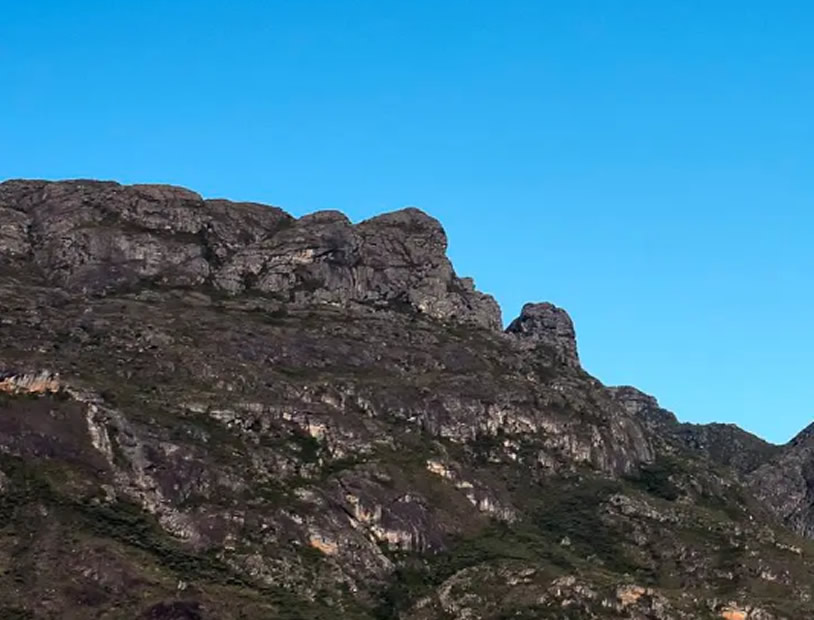
Beyond its religious and environmental importance, the name "Caraça" holds a mystery that spans centuries. The explanation most widely accepted among scholars is that the term was given by the first explorers, who were struck by the mountains' rock formations and associated them with a "big face" — a human face sculpted by nature itself.
However, there are also versions linking the name to the Indigenous Tupi-Guarani language, showing the plural origins of the place and how the Serra do Caraça is a meeting point of cultures, times and meanings.
The "big face" in the mountains theory
One of the most popular explanations for the name links "Caraça" to the Portuguese for "big face". According to this version, 18th-century bandeirantes named the place after seeing, from a distance, a rock formation in the mountains that looked like the profile of a reclining human face.
This natural feature can be seen from certain points on the trail to the Bocaina, or near the swimming pool viewpoint and the Banho do Belchior. From there you can make out the outline of the rocks that, with a little imagination, form the features of a giant face, which gave rise to the name Serra do Caraça.
Although widespread, this explanation is considered more symbolic than linguistic. According to scholars, if the term really came from "big face", the correct form would be the feminine "Serra da Caraça", since the word "caraça" in that sense is feminine in Portuguese. Even so, the legend of the mountain shaped like a human face is one of the most fascinating for visitors.
For those visiting the Caraça Sanctuary, imagining this figure drawn in the rocks adds even more charm to the landscape. After all, it is this mix of history and legend that makes the place so unique and unforgettable for anyone trying to understand where the word Caraça comes from.
The Indigenous meaning: "gorge" or "bocaina"
The second explanation for the name "Caraça" is considered more consistent from an etymological and geographical point of view. According to linguists and historians, the term comes from Tupi-Guarani, in which "caraça" means gorge or bocaina — a large cleft or valley between mountains.
This theory fits the landscape of the Serra do Caraça perfectly, as it has an impressive gorge between the Pico do Sol and the Pico do Inficionado. This majestic valley is one of the region's postcard views and a landmark for both the Sanctuary and the trails that draw visitors from all over the country.
The French naturalist Auguste de Saint-Hilaire, who passed through the region in the 19th century, recorded this interpretation in his travel accounts. Decades later, the researcher José Ferreira Carrato reinforced the theory in his book "As Minas Gerais e os Primórdios do Caraça", published in 1963.
The Indigenous meaning of the name thus not only explains its origin logically but also highlights the ancestral bond of the Serra do Caraça with nature and with traditions that predate the arrival of European colonizers. It is a reminder that the land carries a much older and deeper identity.
The historical and cultural legacy of the Caraça Sanctuary
Whatever the exact origin of the name, the Caraça Sanctuary has become a landmark in the history of Minas Gerais and Brazil. Founded by Brother Lourenço de Nossa Senhora in the 18th century, it became a center of faith, education and environmental preservation, and is now a Private Natural Heritage Reserve (RPPN) covering more than 11,000 hectares.
From the 19th century onward, the Caraça School educated prominent figures such as former presidents Afonso Pena and Arthur Bernardes, reinforcing the cultural and educational importance of the region. The name "Caraça" has thus gone beyond its linguistic origin to represent an institution of learning and spirituality.
The Serra do Caraça is also a point of connection between people and nature. Its mountains, waterfalls and trails hold not only natural beauty but also intertwined stories, legends and meanings. Every rock, path and viewpoint helps tell part of this centuries-old story.
So, more than looking for a definitive answer to where the word Caraça comes from, visitors are invited to experience the place, feel its energy and understand that the name is just the gateway to a world of spirituality, science and wonder.
The Serra do Caraça as a symbol of Minas Gerais identity
The Serra do Caraça is not only a geographical landmark but also a symbol of Minas Gerais identity. Its name, wrapped in mystery and tradition, reflects the way people from Minas see the world: with respect for nature, cultural roots and the wisdom of time.
Among trails, churches, waterfalls and legends, visitors discover that the name "Caraça" sums up the grandeur of the region — whether through the enigmatic "face in the mountain" or the immense valley that cuts through the heart of the range. Both interpretations reveal the depth of a land that is at once sacred and natural.
Today the area is considered one of the main tourist destinations in Minas Gerais, attracting travelers seeking history, spirituality and contact with nature. The name "Caraça" has also become synonymous with environmental preservation and sustainable tourism.
The Serra do Caraça thus keeps its essence alive: a place where past and present meet, and where every visitor is invited to reflect on origins — not only of the name, but of the very relationship between people and the environment around them.