Bicame de Pedra (Stone Aqueduct) in Catas Altas, MG
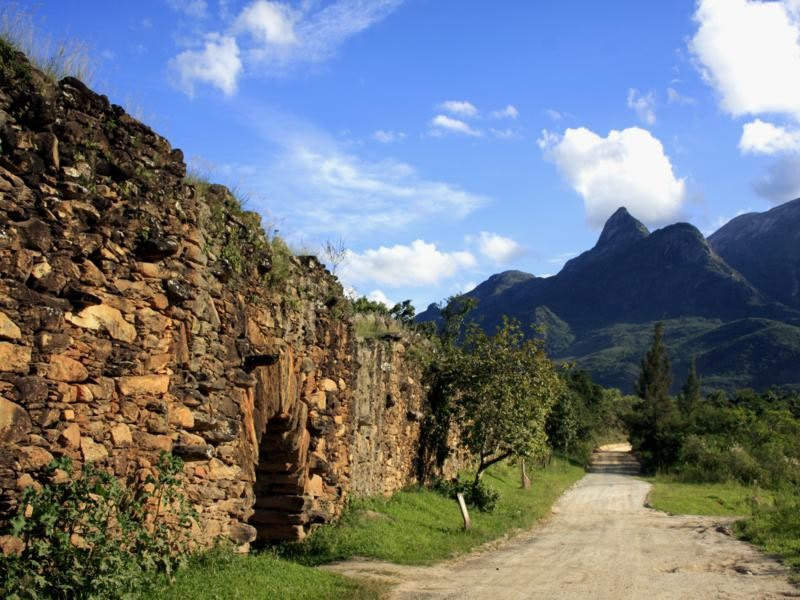
A historic monument among the mountains of the Serra do Caraça
The Bicame de Pedra (Stone Aqueduct), in the municipality of Catas Altas, is one of the most impressive historic monuments in Minas Gerais. Built in the 18th century by enslaved people, the aqueduct was designed to carry water coming down from the Serra do Caraça to the Brumado area, where gold was mined and washed.
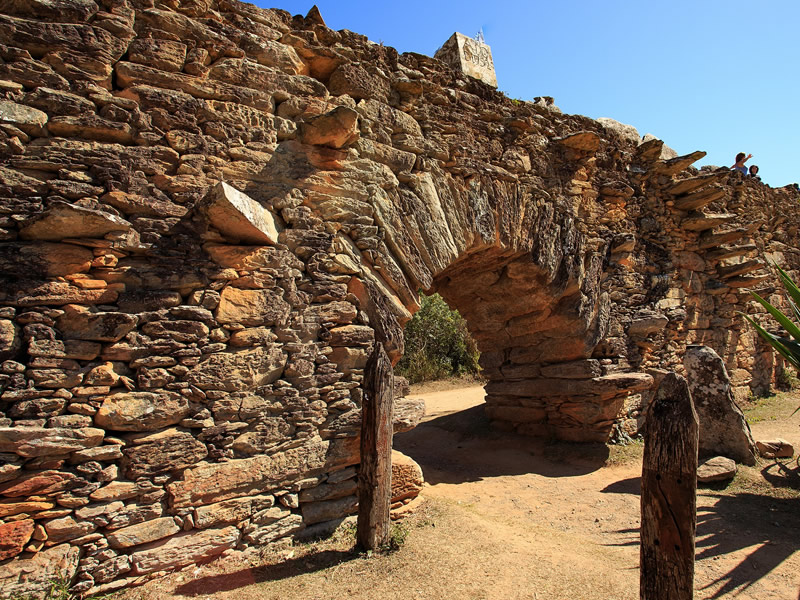
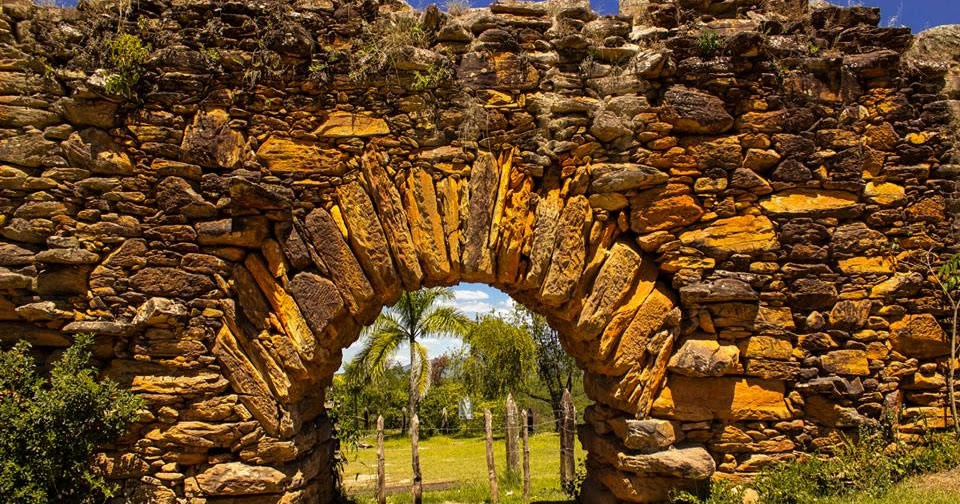
Made of large, precisely fitted quartzite blocks, the structure is a true work of colonial engineering. Most remarkably, the Bicame de Pedra was built without cement or mortar, using the dry-stone masonry technique, in which each stone is held in place by the next — a method that goes back to Roman construction.
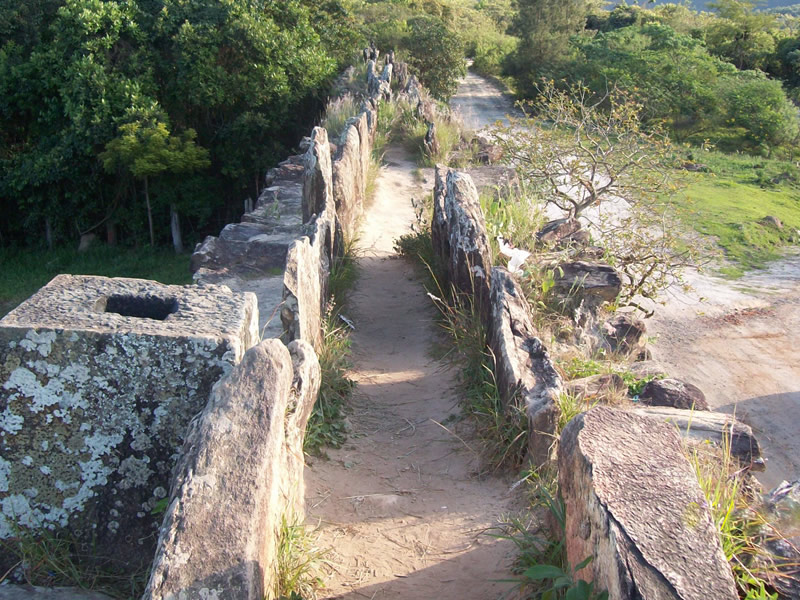
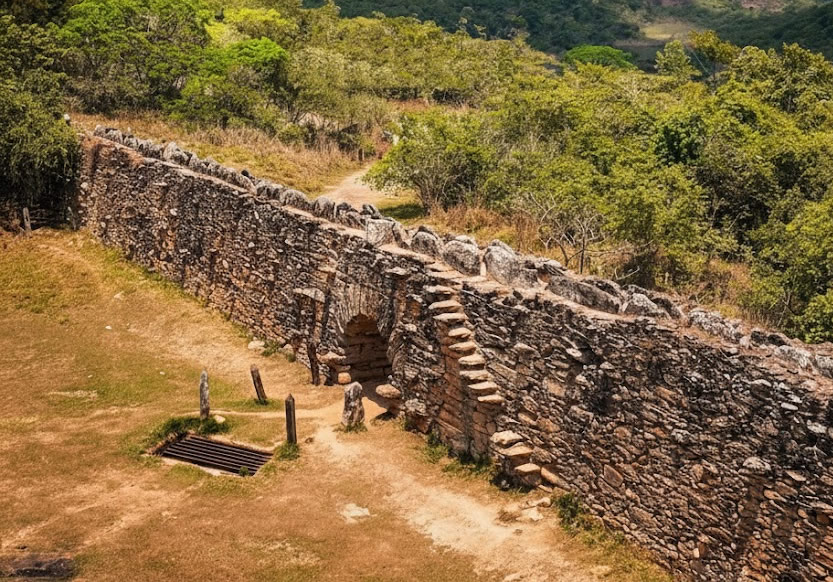
Today, about 200 meters of the original aqueduct remain, reaching about 5 meters at its highest point. Despite the centuries, the structure still stands firm, defying time and standing out as one of the most important architectural landmarks of the historic heritage of Catas Altas.
Set amid the lush nature of the Serra do Caraça, the Bicame has also become a tourist destination that delights visitors interested in history, architecture and ecotourism. It is part of the Estrada Real (Royal Road) circuit, where it was chosen as one of the 21 wonders of the route.
The history and origins of the Bicame de Pedra
Construction of the Bicame de Pedra began around 1792, when gold mining in the region was at its height. The main purpose of the aqueduct was to carry water from the Serra do Caraça to Brumado, supplying the water needed to wash and separate the gold.
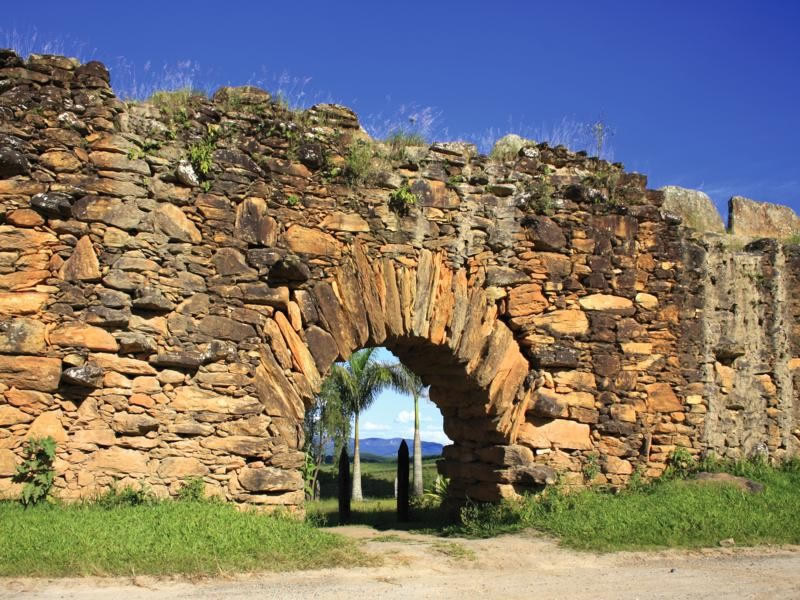
This grand structure was built by the labor of enslaved people, who used methods inspired by Roman hydraulic engineering. The monument's central arch, for example, was designed so that each stone rests on the next, creating natural support without the need for mortar.
In colonial times, the Bicame supplied not only mining but also the farms and villages of the region, which depended on the water carried by the aqueduct. With the decline of mining, the structure lost part of its practical role, but it remained a symbol of the ingenuity and resilience of a people who left their mark on the history of Minas Gerais.
Today the Bicame de Pedra is a silent witness to the past of the Serra do Caraça, representing both the suffering of enslaved labor and the technical skill of the buildings of the time. Its legacy is officially recognized: the ensemble was listed in 1998 as historic and landscape heritage of Catas Altas, under Decree 75/1998.
Architecture and construction techniques
The Bicame de Pedra is a fascinating example of colonial Minas Gerais architecture. Built entirely of quartzite, the aqueduct has a wall about 251 meters long and 5.10 meters high, according to records by local historians and researchers.
Its construction technique, known as canjicado or dry-stone masonry, uses no mortar at all. Each block was carefully cut and fitted to ensure stability and durability — a true feat of 18th-century engineering.
The central arch, at the highest point of the wall, is both structural and aesthetic. It forms a natural gateway between the two sides of the structure and frames the landscape of the Serra do Caraça in the background. It is precisely this contrast between human work and nature that makes the place so photogenic and inspiring.
At the top of the Bicame you can still see the old channel through which the water flowed from the mountains to the mining areas. This feature adds to the historical and technological value of the aqueduct, which combines function, art and endurance.
How to get to the Bicame de Pedra and what to do there
The Bicame de Pedra is about 12 km from downtown Catas Altas: roughly 8 km on the MG-129 highway (toward Santa Bárbara) and another 4 km on a dirt road in good condition. The route is well signposted and can be driven in an ordinary car.
From Belo Horizonte, the most common route is the BR-381 to Barão de Cocais, then the MG-129 to Catas Altas. From Ouro Preto, access is also via the MG-129, a scenic drive of about 1 hour 30 minutes.
Visiting the Bicame is free and possible any day of the week, preferably during daylight, as there is no artificial lighting. Walking around and viewing the structure usually takes 30 to 60 minutes — an easy outing, but full of history and natural beauty.
Besides admiring the monument, visitors can explore nearby trails, take photos and enjoy the panoramic view of the Serra do Caraça, the perfect backdrop for this priceless heritage site.
Tourism, preservation and curiosities
The Bicame de Pedra is a remarkable example of how historic heritage can coexist in harmony with nature. The surrounding landscape is made up of grasslands, mountains and the rich biodiversity typical of the Espinhaço Range, to which the Serra do Caraça belongs. This combination makes it one of the most popular spots for tourists and photography lovers.
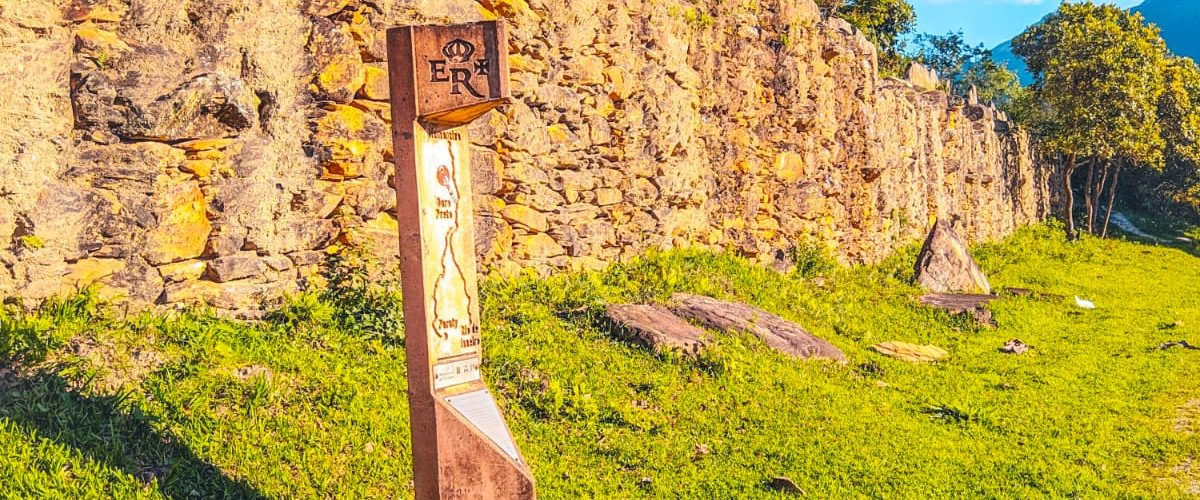
On sunny days, the contrast between the blue sky and the pale stones makes the scene even more impressive. The site also has an Estrada Real totem, marking the historical importance of the Bicame on the old route traveled by mule drivers and miners.
Because of its importance, the monument was included in the list of the 21 Wonders of the Estrada Real, a title that reinforces its cultural and tourist value. Preserving the site depends on visitors' care: avoid touching the stones and do not damage the structure, which has stood for more than two centuries.
Visiting the Bicame de Pedra in Catas Altas is more than an outing: it is an immersion in the living history of Minas Gerais and the Serra do Caraça, a place where nature and memory meet in a unique way.
Photo gallery