Mill and Water Tank Ruins, Morro D'Água Quente, MG
Location: District of Morro D'Água Quente – Catas Altas – MG
Landmark: About 6 km from Catas Altas, toward Mariana. The ruins are near the Church of Senhor do Bonfim and are also known as the Curral dos Cabritos (Goat Pen).
A heritage of stone and labor
The Mill and Water Tank Ruins of Morro D'Água Quente, a district of Catas Altas, are among the most impressive testimonies to the mining past of the Serra do Caraça. Built in the 18th century, they were raised by enslaved labor at a time when gold was the main driver of the economy and of local life.
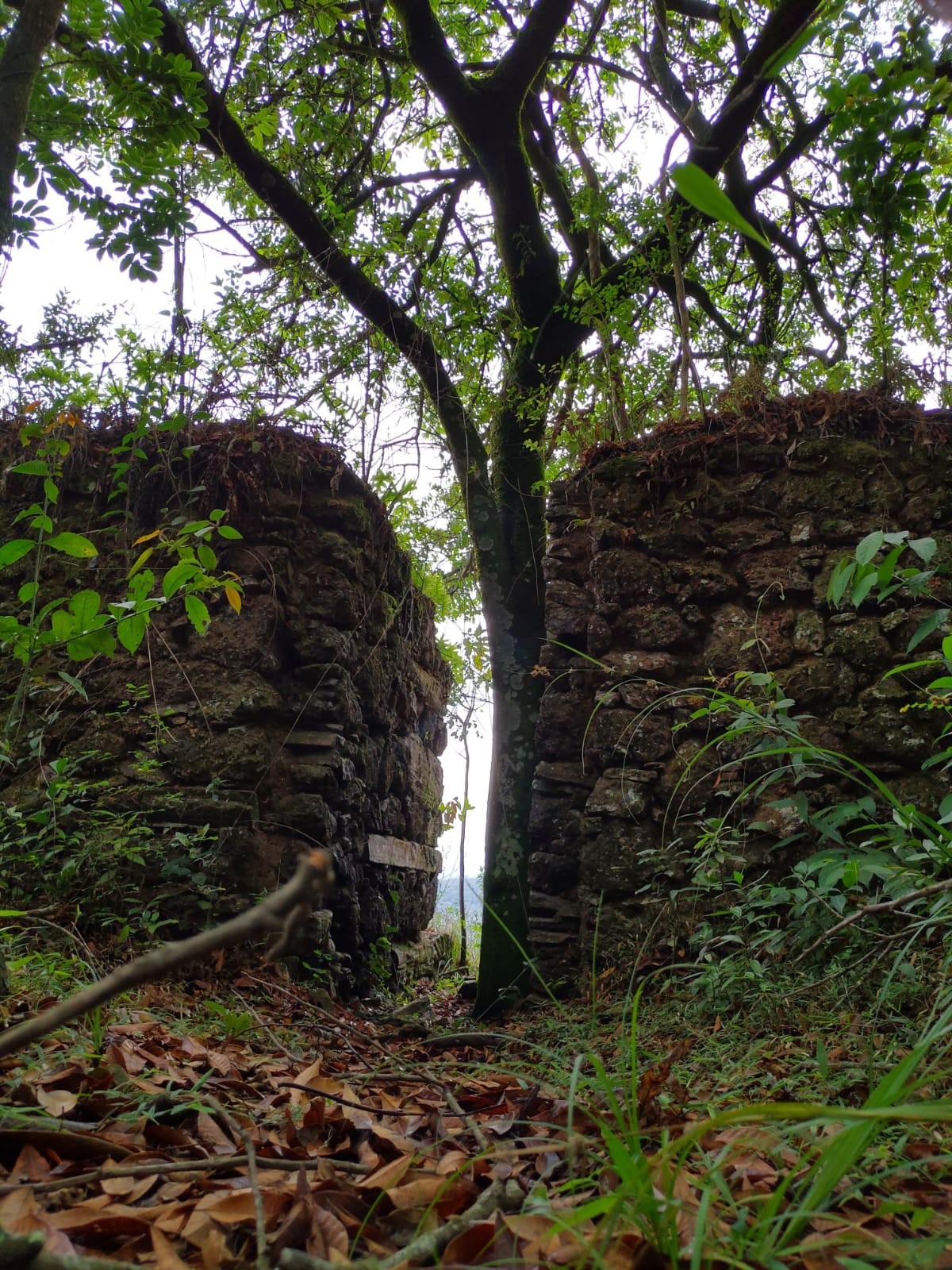
These stone structures, also known as the Mundéu de Pedras or Curral dos Cabritos, have stood for more than two centuries, holding in their walls the memory of an era marked by mineral wealth and the harsh reality of forced labor. Their silent grandeur and the building technique used impress visitors and heritage scholars alike.
In 2002, the ruins were listed as Municipal Heritage, officially recognizing their historical, architectural and cultural value. Since then, the site has been part of the group of protected properties of Catas Altas that make up the material and symbolic heritage of the Serra do Caraça.
Every stone stacked there tells part of the story of the gold cycle — a story of human effort, ingenuity and memory.
The colonial engineering of the stones
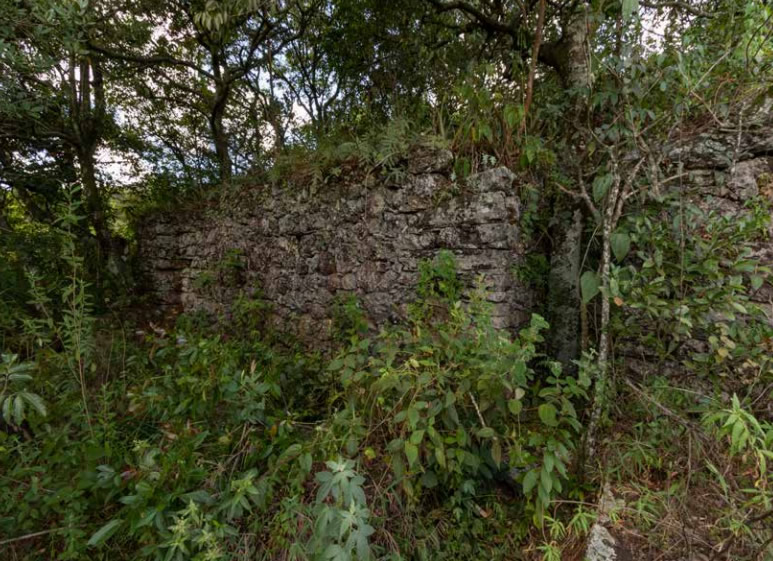
The water tanks and mills were built with slabs and stones stacked dry, that is, without mortar. This technique, known as dry-joint masonry, required precision and skill, ensuring strength and stability even after centuries of exposure to the elements.
The ruins measure about 23 meters wide by 11.40 meters long, with walls up to 3 meters thick and heights ranging from 1.5 to 2.4 meters. The meticulous arrangement of the stones shows the technical mastery of the workers who built them, even without modern engineering resources.
The structure was designed to hold back water — essential for mining operations. The water stored in the tanks was used to wash the ore and separate the gold nuggets, a process that required large volumes of water and hydraulic power. The same flow of water also drove the stone mills, which processed the extracted material or served related activities.
These structures reveal the ingenuity and technical knowledge of the enslaved people who, with limited resources, built a highly efficient hydraulic system — a remarkable feat of colonial architecture.
A portrait of mining in the Serra do Caraça
The ruins of Morro D'Água Quente bear witness to the intense mining activity that shaped the interior of Minas Gerais in the 18th century. Water, vital for running the mills, was carefully dammed and channeled through stone channels and spouts. This allowed the maximum use of natural resources, integrating human engineering into the landscape of the Serra do Caraça.
Historical accounts indicate that the name of the district, "Morro D'Água Quente" (Hot Water Hill), comes from the hot springs that once existed nearby — described by the French naturalist Auguste de Saint-Hilaire in 1887. These springs were buried as excavations for gold advanced, underlining the strong link between the land and mining.
Today the ruins are partly covered by vegetation but retain their grandeur and authenticity. They are a symbol of the gold era and a reminder of the anonymous contribution of those who, in harsh conditions, helped build the history of Catas Altas and the whole Serra do Caraça region.
Walking among the stones of the old hydraulic system is like following the trails of memory — a silent journey into the heart of colonial mining.
Memory, resilience and preservation
The Mill and Water Tank Ruins are not just an archaeological remnant but a symbol of resilience and memory. They represent the strength of human labor and the legacy of the communities that shaped the land of the Serra do Caraça. The 2002 municipal listing ensures their preservation, allowing future generations to learn about this important chapter of Minas Gerais history.
Besides their historical importance, the site has a unique scenic value. The texture of the stones, the contrast with the green mountains and the sound of the water still flowing through the valley create a deep connection with nature and the past.
Conserving these ruins reinforces the role of Catas Altas as a guardian of the historic heritage of the Serra do Caraça, where faith, nature and memory live in harmony. Places like this keep alive the essence of the gold of Minas — no longer the precious metal, but the glow of stories that time has not erased.
Visiting the Mill and Water Tank Ruins is understanding that the past is not buried under the stones — it pulses between them, like the very water that once turned the mills of Morro D'Água Quente.
Photo gallery