Mother Church of Santo Antônio in Santa Bárbara, MG
Location: Praça Cleves de Faria, Downtown – Santa Bárbara – MG
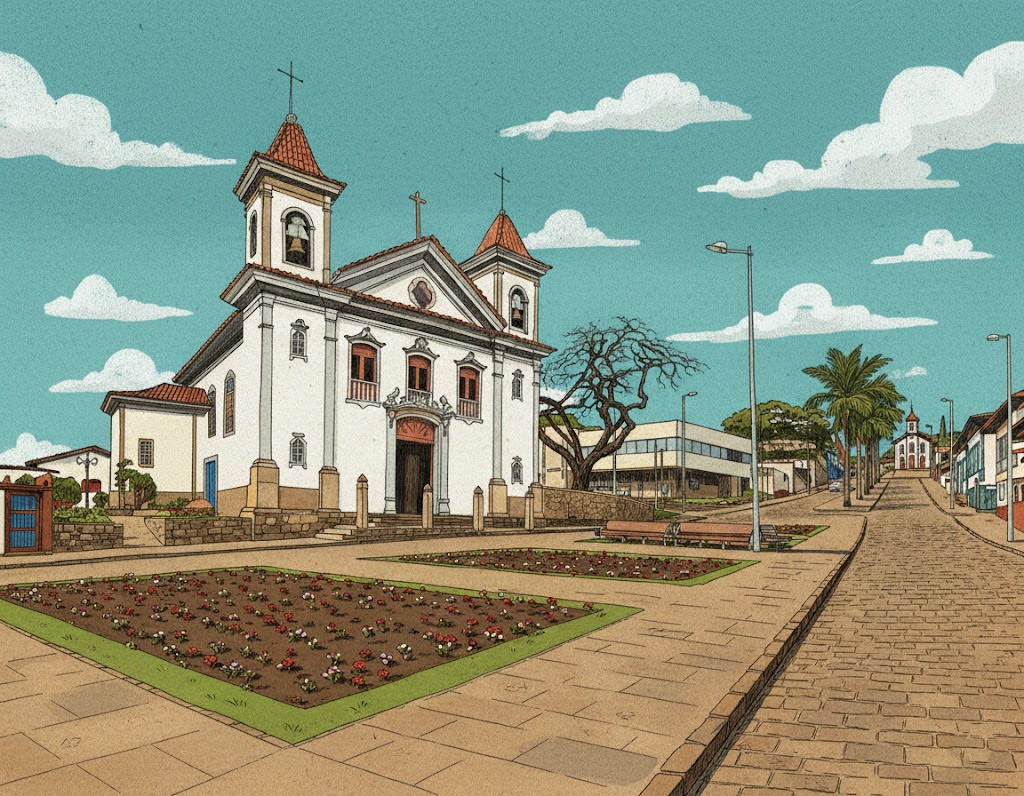
Landmark: located in the heart of the Historic Center, the Mother Church of Santo Antônio is Santa Bárbara's main religious and artistic symbol.
Origins and founding of the church
The history of the Mother Church of Santo Antônio is bound up with the very origins of Santa Bárbara. Founded in 1704 by the bandeirante (colonial explorer) Antônio Silva Bueno, the town grew up along the Estrada Real as the Arraial de Santo Antônio do Ribeirão Santa Bárbara. The patron saint, revered by the Portuguese, gave the settlement its name and has shaped local devotion since the early 18th century.
The first references to the building of a church date from 1713, when the parish began to take shape around faith and mining. Besides being a religious center, the site was also an important crossing point between the Gold Route and the Diamond Route, which helped the region develop and consolidated the community growing at the foot of the Serra do Caraça.
Over time the first church was enlarged, and the current mother church came about thanks to the dedication of the Brotherhood of the Blessed Sacrament. The original wattle-and-daub building threatened to collapse around 1760 and was rebuilt with greater solidity and artistic refinement. This reconstruction gave the church the features that delight visitors and heritage scholars today.
Architecture and sacred art
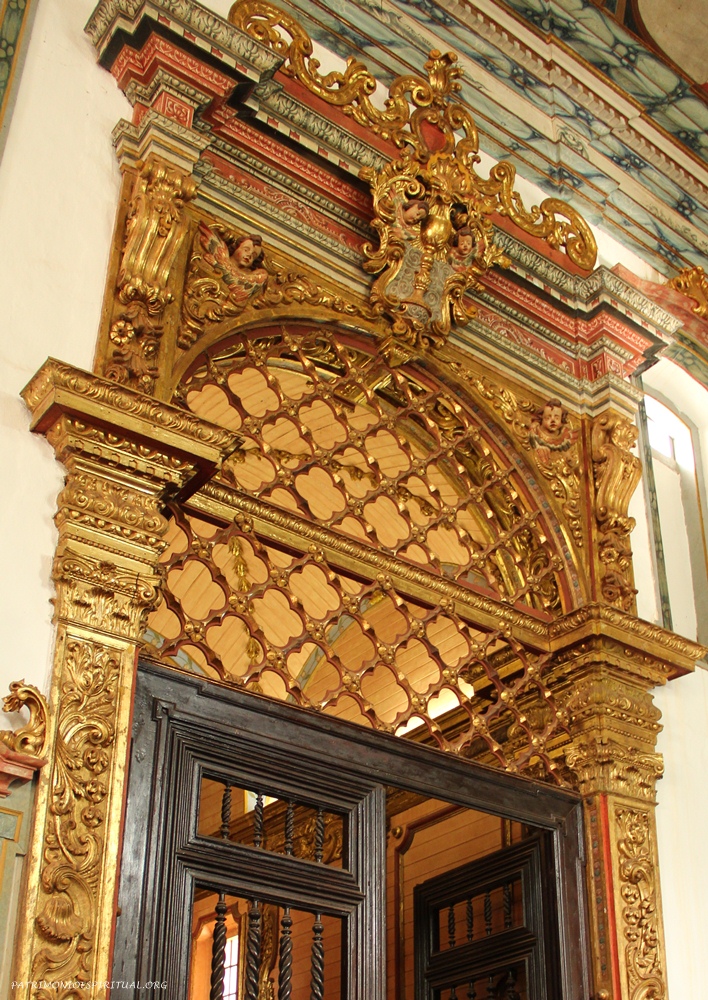
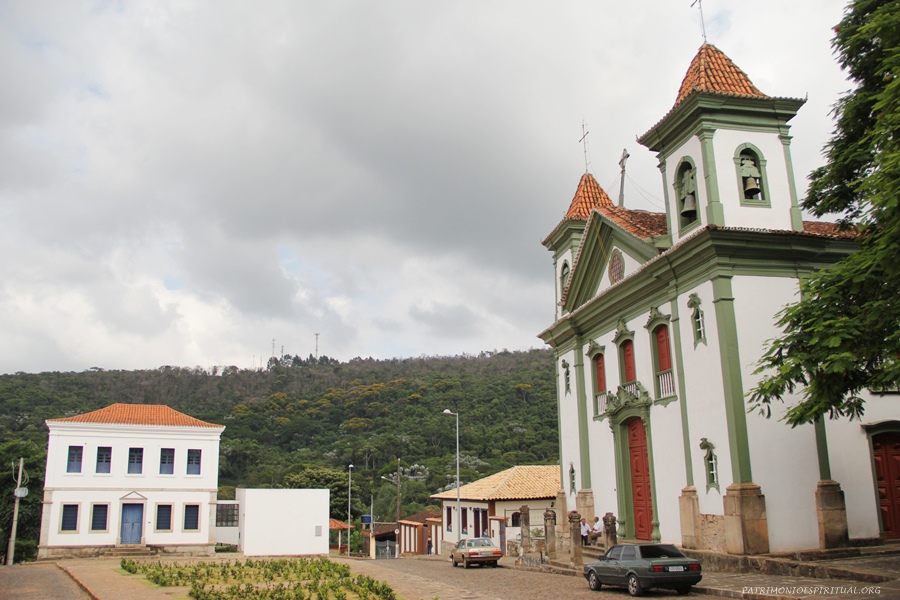
The grandeur of the Mother Church of Santo Antônio reveals the technical skill and talent of the masters who built it. Its triangular façade, flanked by two square towers topped with pyramidal roofs, lends dignity and beauty to Santa Bárbara's townscape. Built of clay and wood, the structure follows the standards of colonial Minas Gerais architecture, with symmetrical windows and a noble entrance portal that invites contemplation.
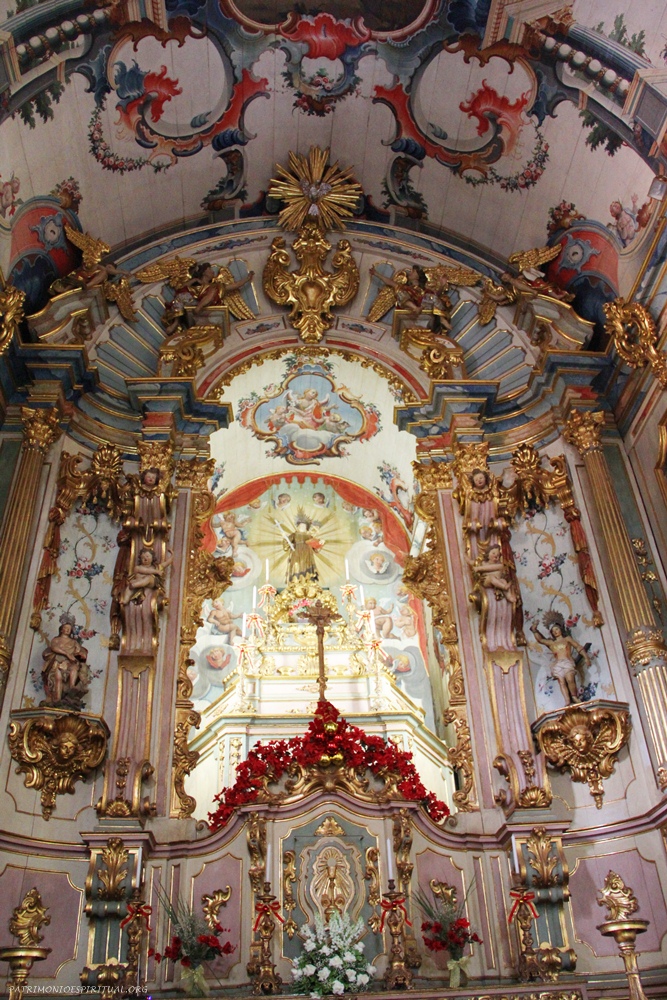
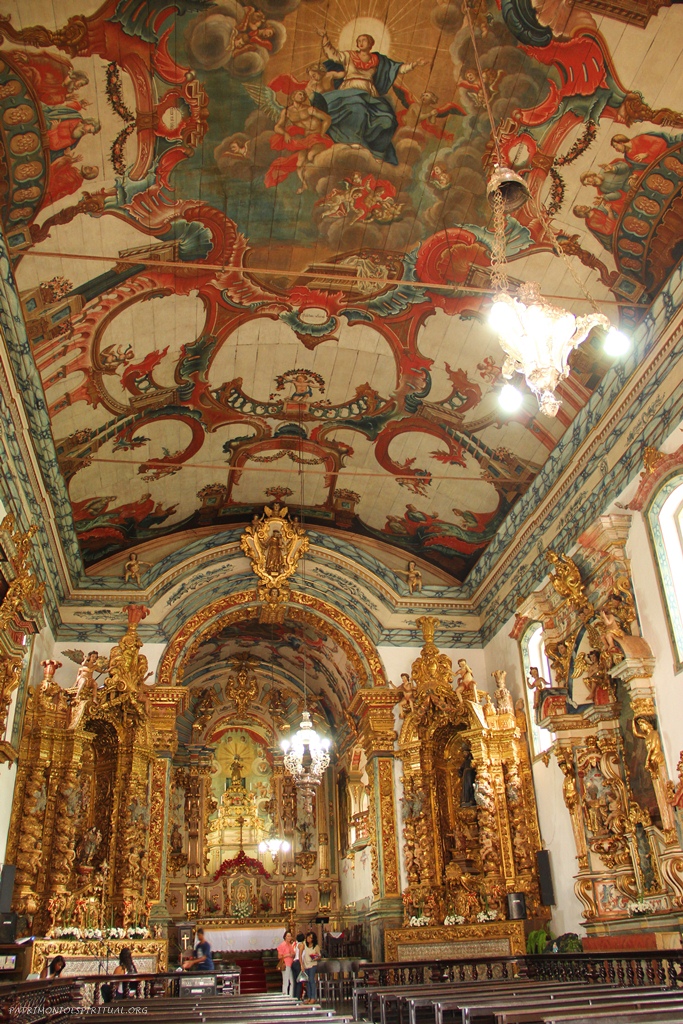
Inside, visitors find one of the most beautiful artistic ensembles in Minas Gerais. The rococo high altar was carved by Francisco de Faria Xavier and Antônio Martins Passos, replacing the old baroque altar of the first building. Its gilded columns, reliefs and angelic figures form a composition of rare harmony, in which the image of Santo Antônio stands out amid details that recall the devotion and spirituality of the time.
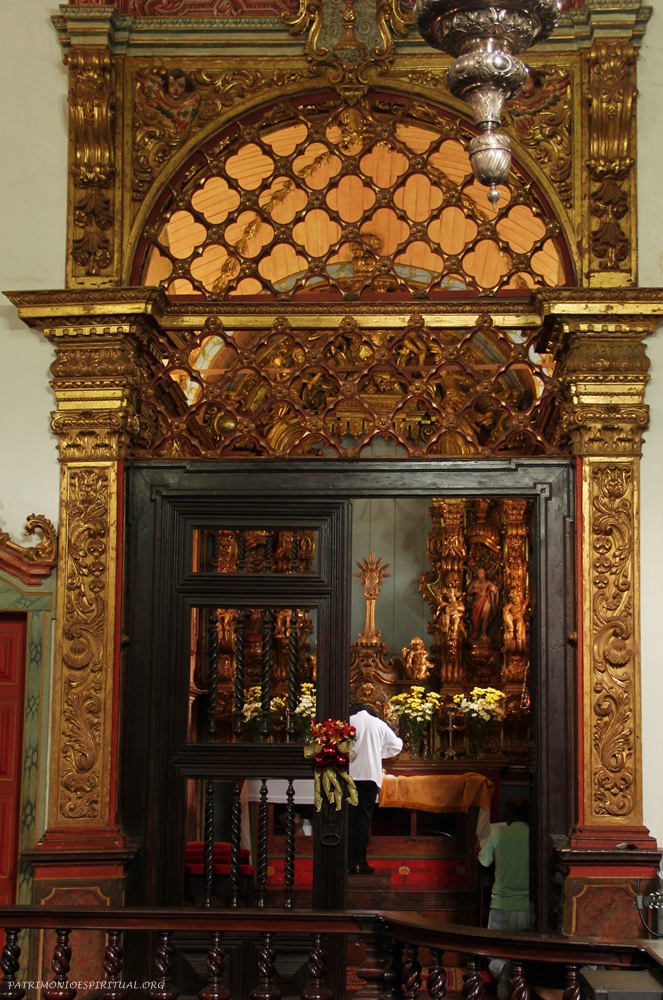
Another highlight is the Chapel of the Blessed Sacrament, built in a transverse position — something unusual in the region —, where parts of the original 1718 altar were reused. In the center of the chapel lies the image of the "Senhor Morto" (Dead Christ), which draws worshippers and pilgrims throughout the year and makes the space an important place of faith and reflection.
Mestre Ataíde's paintings and the restoration
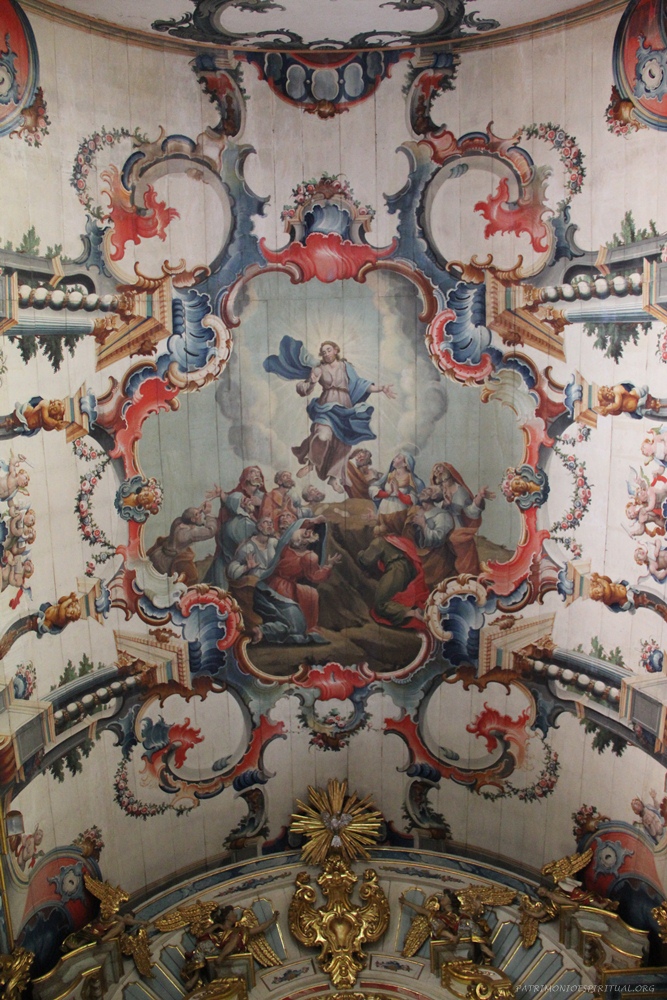
The crowning glory of the Mother Church of Santo Antônio is its ceiling, painted by Mestre Ataíde, one of the greatest artists of Minas Gerais baroque. In 1806 he and his pupils completed the paintings on the ceilings of the nave and chancel, depicting the Ascension of Christ and the Assumption of Our Lady. The use of perspective and the play of light and shadow create an illusion of movement and depth, giving visitors the feeling of standing beneath a heavenly sky in perpetual ascent.
These works are considered among the most striking in the whole of Minas Gerais' sacred heritage and give the church immeasurable artistic value. Every detail of the paintings reflects the blend of technique and devotion that defines baroque art in the Serra do Caraça region.
In recognition of its historic and symbolic value, the church underwent careful restoration between 1998 and 2004. The meticulous work restored the church's original splendor, ensuring that future generations can continue to admire this icon of Minas Gerais faith and culture. Today the Mother Church of Santo Antônio is a listed national historic and artistic monument and one of the main tourist attractions of the Serra do Caraça, welcoming visitors from all over Brazil.
Photo gallery