Serra do Caraça: Historic, Cultural and Natural Heritage
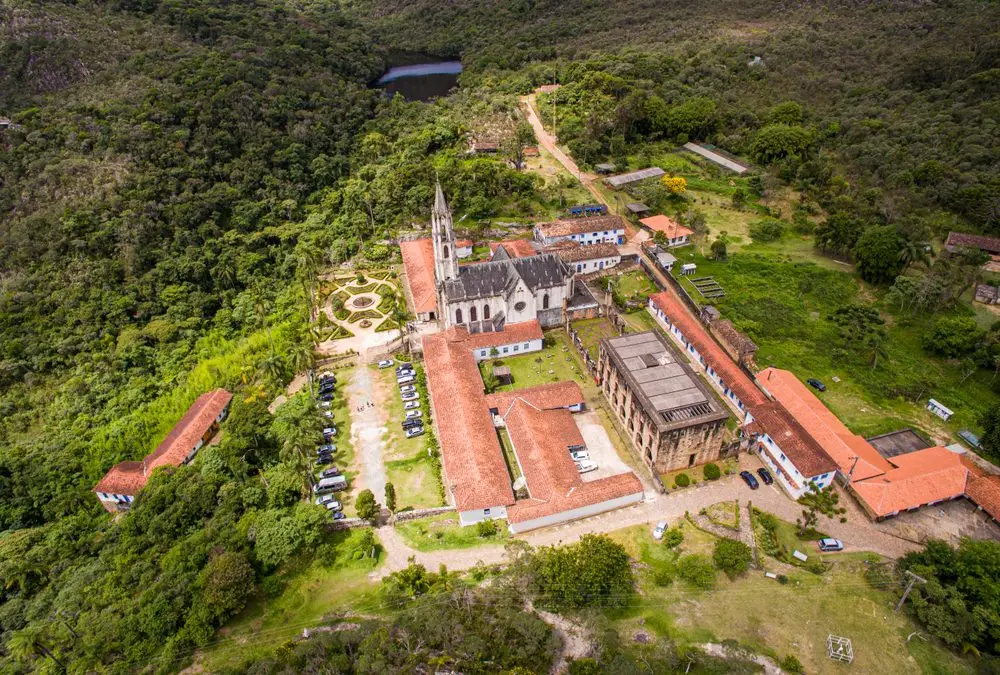
The Serra do Caraça holds a unique place in the history of Brazil. Much more than a strikingly beautiful mountain range, the Caraça is a place where education, faith, science, culture, politics, environmental preservation and national memory are intertwined. Located in the heart of Minas Gerais, between the municipalities of Santa Bárbara, Catas Altas and Barão de Cocais, the Caraça has established itself over more than two centuries as one of the most important symbols of Brazilian heritage.
Over time, the Caraça ceased to be merely a geographical space and became an intellectual, spiritual and cultural reference. Its role in shaping national leaders, producing knowledge, preserving the environment and strengthening the identity of Minas Gerais and Brazil is recognized by scholars, institutions and civil society. The history of the Caraça is, in many ways, the history of Brazil in the making.
This article sets out to present, broadly and in depth, the importance of the Caraça from different perspectives, highlighting its history, its educational role, its religious significance, its archives, its political and intellectual contribution, and its contemporary environmental and tourist dimension.
The origins of the Caraça and the formation of a unique historic center
Founded in 1774, at a time of expanding Portuguese settlement in Minas Gerais, the Caraça was born in a context of intense social, economic and cultural change. Initially conceived as a religious space, it soon took on a broader role, becoming a center of intellectual and moral formation in a strategic region of what was then the Captaincy of Minas Gerais.
Throughout its history, the Caraça has passed through Brazil's different political and social periods, from colonial times through the Empire and the Old Republic to the present day. In each of these phases, it remained relevant as a place of knowledge, reflection and human development.
What sets the Caraça apart from many other historic sites in the country is its ability to continuously preserve the essence of its original mission while adapting to the changes of the modern world. This combination of tradition and permanence is central to its importance.
The Caraça School and its contribution to Brazilian education
One of the most remarkable aspects of the Caraça's history is the creation and growth of the Caraça School (Colégio do Caraça), considered by many scholars to be one of the most important educational centers in Brazil in the 19th and early 20th centuries.
The school welcomed students from many parts of the country and became a true breeding ground for political, intellectual, religious and business leaders. It is estimated that about eight thousand students passed through its classrooms during its existence as a formal educational institution.
The teaching model adopted at the Caraça was advanced for its time, combining humanistic education, academic rigor, intellectual discipline and ethical values. Teaching covered philosophy, rhetoric, mathematics, natural sciences, theology, and classical and modern languages, producing individuals with a broad outlook and solid intellectual preparation.
This educational tradition directly contributed to shaping key figures in Brazilian history, reinforcing the Caraça's role as a decisive place in the development of national thought.
The Caraça and the formation of Brazil's political leaders
The Caraça's influence on Brazilian politics is profound and well documented. Over its history, it helped educate presidents of the Republic, state governors, ministers, members of parliament and other public leaders.
Among those who studied at the Caraça are two presidents of the Republic: Affonso Penna and Arthur Bernardes. Both played a central role in Brazil's political history, especially during the First Republic, and took with them values and principles formed during their time at the school.
Besides the presidents, the Caraça educated several governors of Minas Gerais, senators, deputies and public figures who helped shape the country's political institutions. This legacy reinforces the importance of the Caraça not only as a religious or educational space but as a true training ground for national leaders.
A center of intellectual, scientific and cultural production
The Caraça also stood out as a center of intellectual and scientific production. Over the centuries, priests, teachers, researchers and scholars who passed through it contributed to the advancement of knowledge in many fields.
The Caraça's archives are among the richest and most important in Brazil. Manuscripts, rare books, historical records, letters and official documents make up a documentary heritage of inestimable value to researchers, historians and academic institutions.
These archives not only preserve the memory of the Caraça itself but also provide essential information about the history of Minas Gerais and Brazil. They are a true documentary treasure that helps us understand the country's social, political and cultural development.
The religious and spiritual dimension of the Caraça
Spirituality has always been at the center of the Caraça's identity. Since its founding, it has had a strong religious presence, initially linked to the Catholic tradition, especially through the work of the Lazarist priests.
The Caraça became a place of religious formation, spiritual reflection and lived faith. For many, the experience of the Caraça goes beyond intellectual knowledge and becomes a deep encounter with spiritual values, silence, contemplation and introspection.
Even after formal teaching ended, the site kept its spiritual vocation, welcoming visitors, clergy, scholars and people seeking reflection and inner connection. This spiritual dimension is one of the things that make the Caraça unique and timeless.
The Caraça Sanctuary and religious devotion
The Caraça Sanctuary, officially recognized, is another pillar of the site's importance. Besides its historical significance, the sanctuary is a place of living faith, where celebrations, pilgrimages and moments of devotion continue to take place.
The sanctuary's architecture, integrated into the natural landscape of the mountains, reinforces a sense of harmony between faith and nature. This integration is one of the most striking aspects of the Caraça experience, where tangible and intangible heritage complement each other.
The Caraça as environmental and natural heritage
Besides its historical and cultural value, the Caraça is also environmental heritage of the utmost importance. Set in an area of rich biodiversity, it is home to plant and animal species typical of the Atlantic Forest and Cerrado biomes.
Environmental preservation has been a constant concern throughout the Caraça's history. Today the area is recognized as a nature reserve, with practices focused on conservation, scientific research and environmental education.
Balancing preservation and tourism is one of the Caraça's greatest challenges — and also one of its greatest achievements. It manages to welcome many kinds of visitors without compromising the integrity of its ecosystems.
Cultural, historical and sustainable tourism
Today the Caraça is one of the main cultural and ecological tourism destinations in Minas Gerais. Visitors from all over Brazil and the world come to learn its history, explore its trails, admire its historic architecture and experience the tranquility of the mountains.
Tourism at the Caraça goes beyond leisure. It is an educational, transformative experience that brings people into contact with history, nature and spirituality. Trails, waterfalls, guided tours, museums and memorial spaces are all part of what visitors can enjoy.
This model of sustainable tourism helps value the heritage, generate local income and raise awareness of the importance of environmental and cultural preservation.
Recognizing the Caraça as world heritage
Given its historical, cultural, educational, religious and environmental importance, recognizing the Caraça as world heritage seems a natural and necessary step. The values the Caraça represents go beyond regional and national borders.
International recognition would strengthen the preservation of its historical archives, increase the site's visibility and contribute to its long-term protection. It would also highlight Brazil's role in preserving heritage that uniquely combines nature, culture and spirituality.
The Caraça in the memory and identity of Minas Gerais
For Minas Gerais, the Caraça is more than a point on the map. It is part of the state's cultural identity, having influenced generations and helped shape values still reflected in Minas Gerais society today.
The memory of the Caraça is present in the political, educational and religious history of the state. It is a symbol of cultural resilience, the production of knowledge and respect for nature — values deeply rooted in the identity of Minas Gerais.
A legacy that spans generations
The importance of the Caraça is not limited to the past. Its legacy remains alive and relevant today, inspiring preservation, education, research and responsible tourism.
Every visitor, researcher or scholar who comes to the Caraça connects with a history spanning centuries. This bond between past, present and future is what makes the Caraça a living heritage, in constant dialogue with contemporary society.
Conclusion: the Caraça as a symbol of the real Brazil
The Serra do Caraça represents the deep, real Brazil — one that values education, culture, spirituality, nature and historical memory. Its importance goes beyond simple classifications, as it brings together fundamental dimensions of the human experience in a single place.
Preserving the Caraça means preserving Brazil's history, its cultural diversity and its environmental wealth. Recognizing its importance is a commitment to future generations, ensuring that this heritage continues to inspire, educate and transform lives.
The Caraça is not just a place to visit. It is a place to be understood, respected and experienced. A true world heritage site, built over time through the union of faith, knowledge, nature and humanity.