Serra do Caraça: History, Faith and Nature in Minas Gerais
A treasure hidden in the Espinhaço Range
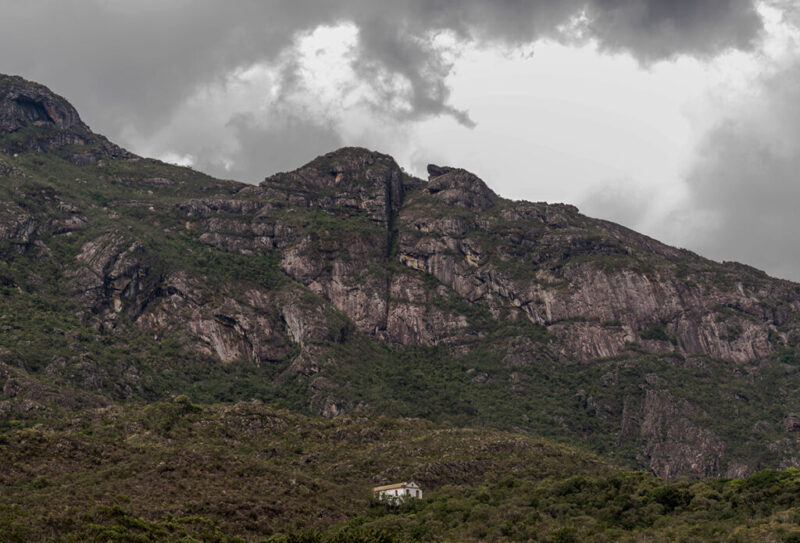
When we think of Minas Gerais, we usually picture historic churches, old towns and mountains that seem to go on forever. But there is a place where all of this comes together even more intensely: the Serra do Caraça. It lies in the municipality of Catas Altas, in the Espinhaço Range, and holds a heritage spanning centuries, combining faith, education, culture and nature in a single setting.
The arrival alone is impressive. The road winds through the mountains and, at every bend, reveals some of the biodiversity of the Minas Gerais Cerrado: twisted trees, small hardy flowers, birds darting past and a high-altitude silence that seems to "clear" the mind. It is the kind of road that invites you to slow down, look calmly and realize that the destination is not just a place — it is an experience.
Amid this landscape, the buildings appear as a surprise. From afar you can see a tall tower and a neo-Gothic architectural ensemble with pale walls and dark roofs. The contrast between stone, sky and mountains makes the complex look almost "planted" among the peaks, as if it had always belonged there.
Around the building, the setting opens into courtyards, well-kept gardens and trees that completely change the "feel" of the place. Palm trees, open areas, walking paths and spaces for contemplation create a unique atmosphere: welcoming yet grand, as if the landscape demanded respect and silence.
This ensemble is known as the Caraça Sanctuary, now organized as a tourism center with museums, a library, historical and photographic archives and spaces for events and activities. Most remarkably, all this is surrounded by an extremely valuable nature reserve: the Caraça Natural Park, which preserves the feeling of a "refuge" among the mountains.
So when we talk about the Serra do Caraça, we are not just talking about a beautiful tourist spot. We are talking about a place where history and nature go hand in hand, and where each visit seems to reveal something new — an architectural detail, a different trail or a silence that does you good.
Where the name Caraça came from and how it all began
The first known record of the Caraça dates from around 1708, when the name was associated with a stretch of the Espinhaço Range on maps of the former Province of Minas Gerais. Even with this early reference, the origin of the name still arouses curiosity, and two hypotheses are usually mentioned as the best known.
One suggests that, in Tupi-Guarani, "Caraça" could mean something like gorge, referring to the natural cleft between the Pico do Sol and the Arraial do Inficionado, considered one of the first settlements in the area. The other hypothesis is more poetic and visual: the shape of the mountains would resemble a "face" lying down, looking up at the sky.
Whatever the explanation, the name seems to suit the place. The Serra do Caraça has a mix of grandeur and mystery, as if it held stories even before anyone recorded them. And it was in this setting, in the 18th century, that a key figure appeared: Brother Lourenço de Nossa Senhora.
In 1770 the area was still a sesmaria (colonial land grant) when he bought it. From then on, Brother Lourenço began building a lodging house for pilgrims and a Baroque chapel dedicated to Nossa Senhora Mãe dos Homens (Our Lady Mother of Mankind), a Marian devotion of Portuguese origin. He had helpers but did much of the work practically alone, with a persistence that would become a legacy.
Over time, the difficulties grew. He was getting older, the challenges of the work were great, and the idea of turning the place into a pilgrimage center seemed to require more than willpower alone. So Brother Lourenço made a strategic decision: he wrote a will addressed to the King of Portugal, Dom João VI.
In this will, he donated the land and the Sanctuary in the hope that the Portuguese Crown would continue the project, appointing priests to run the pilgrimage center and, if possible, create a place for educating boys. This choice would change the destiny of the Caraça, as it would also become a center of intellectual formation.
It is intriguing to think that, in the heart of the Serra do Caraça, a place created to welcome pilgrims also became a symbol of education, discipline and academic excellence. Its history was not planned to be "touristic"; it grew out of need, faith and work — and from the ability of a place to reinvent itself without losing its essence.
The Caraça School and its reputation for academic excellence
In 1820, a year after Brother Lourenço's death, priests Leandro Rebelo Peixoto e Castro and Antônio Ferreira Viçoso arrived at the Caraça, sent at the request of Dom João VI. They belonged to the Congregation of the Mission, a Catholic order devoted to missions, parishes, schools and work with the poor, always with a strong educational focus.
After preaching missions in nearby towns, the priests brought from Rio de Janeiro the first students of what would become the Caraça School. Little by little the institution took shape: classrooms, dormitories, a refectory, rooms for priests and seminarians. What began as a dream of hospitality became a substantial educational complex in the middle of the mountains.
From 1830, renovations and extensions became frequent, keeping pace with the growing number of students. Larger dormitories, an enlarged chapel, a recreation room, storage and a theater — the school grew like a small town within the Serra do Caraça, with a life of its own, strict routines and admirable organization.
At a time when regular schooling in Brazil was weak and many Brazilians had to study abroad, the Caraça School stood out as an "oasis" of excellence. Its reputation came not only from its content but from the combination of character formation and broad knowledge, preparing students for the world — with seriousness, discipline and quality as its pillars.
Besides the basic subjects, the curriculum included Religion, Latin, Greek, French, Cosmography, Calligraphy and Drawing. It was a model of education that valued both rigor and general culture, producing people with a broad outlook who could work in many areas of society.
It is no coincidence that the Caraça educated important names in Brazilian history: some 500 priests, 21 bishops and 120 politicians, including former presidents of the Republic Afonso Pena and Arthur Bernardes. And the list goes on: judges, doctors, engineers, scientists and teachers also studied there.
This educational period left marks that can still be felt when visiting the Serra do Caraça. Despite time and change, there is something in the air that recalls study, silence, order and reflection — as if the walls, corridors and surrounding mountains had kept the memory of generations.
The 1968 fire and the reinvention of the Caraça
For about 150 years, the Caraça School educated thousands of students; in total, it is estimated that about 11,000 young people studied there. But on May 28, 1968, a fire abruptly interrupted this story, leaving a wound that also opened the way to a new phase.
The fire started in the early hours, when a student sleeping in the infirmary smelled smoke and alerted the priest in charge of discipline. According to accounts, the cause was an electric hot plate left on in the bookbinding room. The fire spread quickly, and the priority became getting the students out and saving whatever was possible.
The roughly 90 students got out quickly, but there was still the courage to rescue important items. A significant part of the library collection was saved: about 15,000 books out of a total of 50,000. An image of Our Lady of Graces was also rescued, lowered from the third-floor dormitory with ropes in an improvised and risky operation.
The firefighters arrived only in the morning, when the school had already been destroyed. One striking detail: the church was the only building that did not catch fire, because the roof tiles were removed in time, preventing the flames from spreading there. The school then closed its doors, and the Caraça had to mourn the end of a cycle that seemed irreplaceable.
Even so, the story of the Caraça did not end there. Four years later, the site tentatively became a Tourism Center. The decision had a double purpose: to preserve the memory of a Brazilian cultural icon and, at the same time, to protect a vast area of forest and biodiversity, supporting research and educational visits.
Little by little the place came back to life. In 2002, a restoration project brought a modern structure into the interior of the burned building, in contrast with the outer stone walls. The ruins now coexist with an organized, glass-walled space dedicated to memory, culture and visitors.
Today, walking through this space is like crossing layers of time. The Serra do Caraça shows that a place can change its function without losing its soul: from pilgrims' lodging to school, from school to tourism and research center — always keeping the symbolic strength and beauty of the ensemble.
Museums, library and living historic heritage
One of the most special things about the Caraça is realizing that a visit is not just trails and scenery. There is a strong cultural and historical side that makes the trip even more complete — especially for those who like to understand the "why" of places. In the complex, museums, archives and the library invite you to look beyond the photo and dive into history.
The museum and library are in a modern, glass-walled building that frames the ruins of the old living quarters burned in 1968. This contrast is a lesson in itself: the past remains visible and the present is organized around it, without erasing the marks of what happened.
In the museum you can see furniture and objects from daily life in the school's time, as well as changing exhibitions, often about the flora and fauna of the Caraça Natural Park. It is the kind of visit that brings the place to life, turning an imposing building into concrete stories: what routines, habits and spaces for study and socializing were like.
The library is a chapter in itself. It holds rare works, including books from the 15th to the 19th centuries, true treasures. Highlights include early editions and historical collections that help us understand how knowledge circulated and was preserved in other times. For history lovers, it is hard to leave without a certain sense of awe — in the best sense.
The Caraça is also home to the Museum of Sacred Art, with religious pieces and sculptures from the 18th and 19th centuries. These works speak of faith, art and local culture and help explain the sanctuary's importance as a religious and heritage landmark.
Another important space is the Pinacoteca (picture gallery), with a smaller collection of paintings but great symbolic value. Among them is one of the few known images of Brother Lourenço de Nossa Senhora, the founder who started it all. Seeing it is almost like closing a circle: visitors realize that the story that began with one man and a chapel grew to enormous proportions.
This cultural ensemble shows that the Serra do Caraça offers a different kind of tourism: it is not just "go, see and leave". It is a place to learn, reflect and contemplate — and to understand that nature and heritage can go together when there is care and purpose.
Surprising biodiversity and the strength of the RPPN
If the history of the Caraça is impressive, the surrounding nature is no less so. The Serra do Caraça holds remarkable biodiversity in an area that is relatively small compared to the vastness of the Espinhaço Range. And there is a very special reason: three different types of vegetation meet there — Cerrado, Atlantic Forest and high-altitude grasslands (Campos de Altitude).
This combination creates varied environments within a single area, favoring an enormous wealth of species. It is as if every change in altitude or trail revealed a "new ecosystem", with plants, birds and life forms adapted to specific microclimates. For visitors, this means very different landscapes in one place.
In 1994, the Caraça Sanctuary Private Natural Heritage Reserve (RPPN) was created and officially recognized in perpetuity. This category is important because it protects the area from interests that could degrade its natural heritage, while allowing activities such as scientific research and visits for tourism, recreation and education — always responsibly.
The region's flora is known, for example, for more than 200 species of orchids, as well as trees such as candeias, yellow ipês and macaúba palms. For photography or plant-watching enthusiasts, each season offers a different spectacle, with colors and details that go unnoticed by those who walk in a hurry.
The diversity of birds is also striking: hundreds of species have been recorded, including some that are endangered. The sky and treetops are a constant stage for songs, short flights and quick appearances, making the experience even more alive — and reminding us that we are visiting the home of many creatures, not just a "backdrop".
There are dozens of mammal species, and some have become symbols of the place. The maned wolf is the best known, but not the only highlight. What makes it all even more special is the idea of a "sanctuary" in the fullest sense: a place where life finds the conditions to go on existing.
And this protection is not just a technical matter. It defines the future of the place. The Serra do Caraça shows in practice that conservation does not mean "banning everything" but creating balance: allowing guided visits and tourism while respecting biodiversity and the natural processes that keep this ecosystem going.
The maned wolf: symbol, respect and silence
Of all the stories surrounding the Caraça, few are as striking as the relationship between the place and the maned wolf. This elegant, shy animal has become a beloved symbol of the sanctuary, representing both the region's biodiversity and the idea of respectful coexistence between people and wildlife.
The story took hold in 1982, when residents noticed that something was going through the trash bins in the complex. After some attempts and doubts, they discovered it was a maned wolf. Instead of reacting with fear or hostility, the staff began a careful process to show the animal that it was safe there.
They started placing trays of meat at the Sanctuary gates and, over time, moved them closer until they reached the church doors. The logic was simple and powerful: offer food in a controlled way to build a sense of safety, without aggression, letting the animal approach without risk.
Over the years, the maned wolf became an eagerly awaited presence for many visitors. But there is a "ritual" to this encounter: you have to wait for nightfall, go to the church door and be patient. And one essential detail: silence. Noise scares the animal away, and the encounter only happens when visitors respect the timing and behavior of the wildlife.
This experience often leaves a mark on visitors to the Serra do Caraça, because it is different from seeing an animal in a zoo or in a picture. It is real life, in freedom, happening at its own pace. And it changes how people see things: they understand that observing is not controlling, and that the privilege of seeing depends on respect.
At the same time, it is important to remember that, although the species has come off some of the more critical lists in certain contexts, the maned wolf is still classified as vulnerable. This means it still needs protection, preserved habitat and ecological balance — which the RPPN helps to ensure.
The maned wolf has become a public favorite, but deep down it represents something bigger: proof that the Serra do Caraça remains alive, functional and biodiverse. When a top predator roams freely, it is a sign that the ecosystem is still strong.
And perhaps this is the greatest lesson of the Caraça: to be close to something grand, we need to be small in the best sense — lowering our ego, our volume and our hurry — and learn to become part of the silence.
Beauty that needs care and responsibility
The Serra do Caraça is stunning, but it is not a "bubble" cut off from the world. It lies in a region marked by mineral wealth and economic activities that have historically caused environmental impacts. This makes conservation an unavoidable issue for anyone who loves the place and wants it to remain as strong for future generations.
One of the most serious problems cited by environmental teams is wildfires, often started deliberately. Fire causes huge losses of vegetation, damages habitats, affects springs and upsets the balance of wildlife. In mountain areas, recovery can be slow and the effects last a long time.
Besides fires, the surrounding area has activities that require constant attention: mining, grazing, eucalyptus monoculture and charcoal production, often illegal. These practices can put pressure on the land and create a real risk of the reserve becoming "isolated", like an island surrounded by development.
When a protected area becomes an "island", a serious problem arises: animals have fewer corridors to move through, genetic diversity may decline and risks such as localized overpopulation and inbreeding increase. In other words, protecting just one piece is not enough; ecological connections and a landscape-wide view are needed.
That is why management and monitoring have been strengthened over time, including visitor guidance, enforcement and environmental education. Scientific research and partnerships with environmental organizations also help give conservation a technical basis and good planning.
But one point is worth remembering: conservation does not only happen "from the top down". It depends on visitors' behavior. Everyone who walks a trail, disposes of litter properly, follows the rules and values silence is part of this protection. In places like the Serra do Caraça, tourism can be an ally of preservation — as long as it is responsible.
At the same time, the Caraça shows that protecting does not mean eliminating the human experience. On the contrary: tourism there reinforces values, brings people closer to nature, promotes education and creates emotional memories. And emotional memory is one of the most powerful forces there is when it comes to conservation.
In the end, the big question is simple: how do we want this place to be in 20, 50, 100 years? The answer depends on the sum of decisions — by managers, institutions, residents and visitors. And the Serra do Caraça deserves for that sum to be positive.
"Closer to God": architecture, faith and contemplation
Among the mountains, the Caraça's architectural ensemble is not just beautiful: it has a deep meaning. The neo-Gothic Sanctuary of Nossa Senhora Mãe dos Homens is the building that draws the most attention and, for many, is the symbolic "heart" of the place. Inaugurated in 1883, it was built with enslaved labor and regional materials such as soapstone, marble and quartzite from neighboring towns.
The neo-Gothic style, considered the first of its kind in Brazil, has an aesthetic and spiritual purpose: it seeks something more rational and "vertical", as if the architecture led the eye upward. Unlike the Baroque — which tends to move people through its profusion of detail and a sensory approach to the sacred — neo-Gothic suggests reflection and elevation, an invitation to "reach God" through thought.
This church was also born of practical need. The old Baroque chapel associated with Brother Lourenço could no longer hold the number of people. So the idea of a larger sanctuary gained strength, creating a monumental presence that still impresses those arriving by road.
Inside the sanctuary, details stand out. The stained-glass windows, gifts from Emperor Dom Pedro II, are one of the elements that unite history and beauty. There are also religious works of great symbolic and artistic value, reinforcing that the Caraça is not only natural heritage — it is also a place of culture and faith.
Among its treasures are the body of the martyr Saint Pius, a gift sent by Pope Pius VI in 1797, and a 628-pipe organ built by the priests themselves with local wood. The Baroque image of Nossa Senhora Mãe dos Homens, of Portuguese origin, arrived at the Caraça in 1784, directly linking the place to religious traditions that crossed the ocean.
For visitors, attending Mass or simply entering the church in silence can be one of the most memorable experiences. There are service times and moments when the space invites contemplation — and even for those who do not follow a religion, it is hard not to feel the symbolic power of the place.
In the end, perhaps this is what makes the Serra do Caraça so special: it brings together, in one place, trails and stained glass, waterfalls and libraries, the silence of the forest and the silence of the church. And in each of these forms, there always seems to be an invitation to come "closer" to what matters.