Festa do Vinho 2003 in Catas Altas, MG
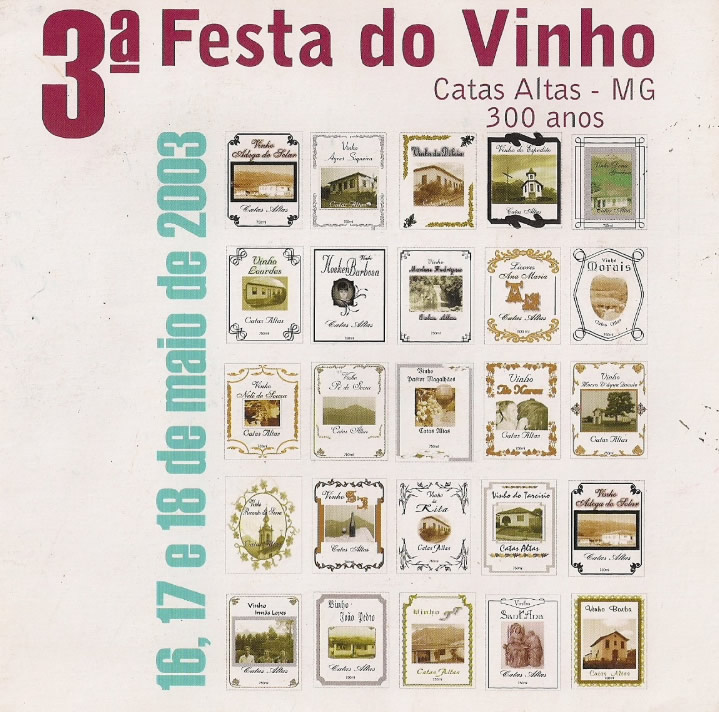
3rd Festa do Vinho
From May 16 to 18, 2003, the town of Catas Altas, at the foot of the imposing Serra do Caraça, celebrated the 3rd edition of the Festa do Vinho (Wine Festival) in an especially symbolic year: the town's 300th anniversary.
Held at the traditional Praça Monsenhor Mendes, the festival reaffirmed the importance of artisanal jabuticaba wine as a symbol of local culture and heritage. The event kept the family-friendly, welcoming format that had delighted visitors since the first edition, strengthening community ties and putting Catas Altas on the map as a cultural reference in the Médio Piracicaba region.
Organized by the town council in partnership with Aprovart (Association of Wine Producers and Family Farmers), the third edition established the festival as an essential part of the town's tourist calendar and one of the most representative events of Minas Gerais tradition.
Tradition and Continuity
The 2003 Festa do Vinho followed the format of previous editions, with three days of music and local cultural activities.
The simple, charming setup included standardized producers' stalls, a main stage and areas for crafts and socializing. The focus remained on artisanal jabuticaba wine, made by Catas Altas families for more than a century and known for its unique flavor.
The event grew in visibility and participation with each edition. In 2003 the crowds were even bigger, boosted by the celebration of the 300 years of Catas Altas — a milestone that reinforced the local community's sense of belonging and pride.
More than a simple party, the event was becoming a celebration of the history, faith and work of the people of Catas Altas, making wine a symbol of continuity and identity.
Music and Culture
The program of the 3rd Festa do Vinho stood out for the quality of its musical and cultural attractions over the three days of celebration.
The main stage welcomed acclaimed singer Paulinho Pedra Azul, one of the best-loved voices of Minas Gerais music, known for hits such as Jardim da Fantasia and Ave Cantadeira. His performance moved the audience and was one of the high points of the event.
The bands Afilhados do Sereno and Brilho da Serra, both from Catas Altas, also took the stage, proudly representing local talent. Their performances brought varied rhythms to the square — from MPB to regional pop — creating a vibrant, energetic atmosphere.
Another new feature this year was circus acts, which delighted children and families and reinforced the cultural and inclusive character of the festival. Street performers, clowns and playful shows brought joy to the public during the day, keeping the festive atmosphere that still defines the event today.
The Role of Aprovart and the Community
Aprovart, founded in 2001, continued to play an essential role in organizing and promoting the festival. The association brought producers, winemakers and family farmers together around a common goal: to preserve the artisanal way of making jabuticaba wine and keep it alive as a tradition.
With the support of the town council and local merchants, the 2003 edition showed progress in organization, increasing the event's visibility and attracting new visitors from neighboring towns such as Santa Bárbara, Barão de Cocais and Mariana.
The result was a festival marked by community unity, which, with simplicity and dedication, turned Praça Monsenhor Mendes into a great stage for culture and togetherness.
Legacy of the 3rd Edition
The 2003 Festa do Vinho was a turning point in the event's history. Besides celebrating the tricentennial of Catas Altas, it definitively established the festival as cultural heritage of the town and a meeting point of tradition, art and history.
With standout performances by Paulinho Pedra Azul and local artists, the edition strengthened the link between past and present — artisanal jabuticaba wine remained the star, a symbol of resilience, faith and regional pride.
From 2003 on, the Festa do Vinho was no longer just a local event; it began to gain regional prominence, attracting tourists and establishing itself as one of the main cultural celebrations of the Serra do Caraça.