Gruta do Centenário in the Serra do Caraça, MG
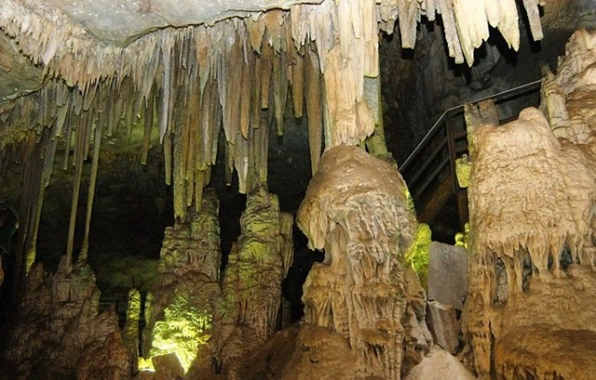
The deepest quartzite cave in the world
Located in the heart of the Serra do Caraça, between the municipalities of Catas Altas and Mariana in Minas Gerais, the Gruta do Centenário (Centenary Cave) is recognized as the largest and deepest quartzite cave on the planet. Set in the Pico do Inficionado, at 2,068 m above sea level, this speleological gem fascinates for its unique formation, its scientific importance and the history of its discovery and exploration.
Location and access
The Serra do Caraça lies within the Iron Quadrangle (Quadrilátero Ferrífero), a region famous for its mountains and rich geological diversity.
The cave is reached from the Caraça Sanctuary, about 120 km from Belo Horizonte. From the Sanctuary's old school, the route follows a steep, rugged trail with almost 900 m of elevation gain to the base of the Pico do Inficionado.
Despite the difficulty, the hike offers stunning scenery, revealing the natural grandeur of the Serra do Caraça and the strength of the quartzite formations that make up the massif.
History and discoveries
Reports of fissures and caves in the Serra do Caraça date back to the 19th century, when naturalists such as Spix and Martius recorded the sound of underground water in the region's mountains.
The Gruta do Centenário was named in honor of the centenary of Brazil's Independence (1922), when priests and students from the Caraça School began exploring it.
In 1952, Father Estaneslau carried out the first, still rudimentary, topographic survey.
Only from 1996, with the systematic work of the Grupo Bambuí de Pesquisas Espeleológicas (a caving research group), was the cave studied scientifically. In 1998, record measurements of 3,790 m of horizontal projection and –481 m of depth were registered, confirming it as the largest and deepest quartzite cave in the world.
Geology and formation
The Serra do Caraça is made up mainly of quartzites of the Minas Supergroup, associated with rocks of the Caraça Group, the Moeda Formation and the Batatal Formation.
The origin of the Gruta do Centenário is directly linked to tectonic activity and mechanical erosion. Structural faults widened over time, and water carrying small quartz fragments slowly carved out the inner passages.
In some places, opal speleothems formed as a result of the partial dissolution of silica. These formations give the cave walls a polished, unique look, making the site of great scientific and geospeleological interest.
Features and dimensions
The main entrance of the Gruta do Centenário is at 2,051 m above sea level, close to the summit of the Pico do Inficionado.
The passages have a square labyrinthine morphology, with corridors ranging from 30 cm to 10 m wide and heights that can reach tens of meters.
The internal network consists of multiple galleries, chambers and shafts connecting different entrances, such as the Abismo da Velózia and the Abismo do Inficionado.
Small underground streams run inside, such as the Córrego do Inficionado, the Córrego do Chantilly and the Córrego do Areião, forming an intricate water system hidden beneath the quartzite of the Serra do Caraça.
Biodiversity and conservation
Despite the extreme conditions, the Gruta do Centenário is home to a diverse cave fauna of insects, spiders, crickets, harvestmen and birds such as swifts, which nest in the crevices.
Bird guano is the basis of the entire underground ecosystem, sustaining a peculiar food chain.
Today, the Caraça Sanctuary and the Grupo Bambuí maintain monitoring and restrictions on visits, especially during the nesting season, to preserve the environmental integrity of the cave and its species.
Scientific and tourist importance
The Gruta do Centenário is a milestone in Brazilian speleology and one of the greatest natural symbols of the Serra do Caraça.
Its importance goes beyond its scenic beauty: it is a geological and water heritage site that helps us understand how caves form in non-limestone rocks.
Although access is restricted to authorized, guided expeditions, the site is frequently studied by researchers and attracts adventurers eager to learn about the history and mysteries of the Serra do Caraça.
Conclusion
A symbol of the power of nature and the geological complexity of Minas Gerais, the Gruta do Centenário is a true treasure of the Serra do Caraça.
Its scientific, historical and environmental value reinforces the need for the preservation and sustainable management of this unique region, which is also home to peaks, trails, waterfalls and exuberant biodiversity.
Visiting or studying the Caraça means understanding an important part of Brazil's natural history and witnessing the grandeur of one of the most impressive places in the Espinhaço Range.